Introduction
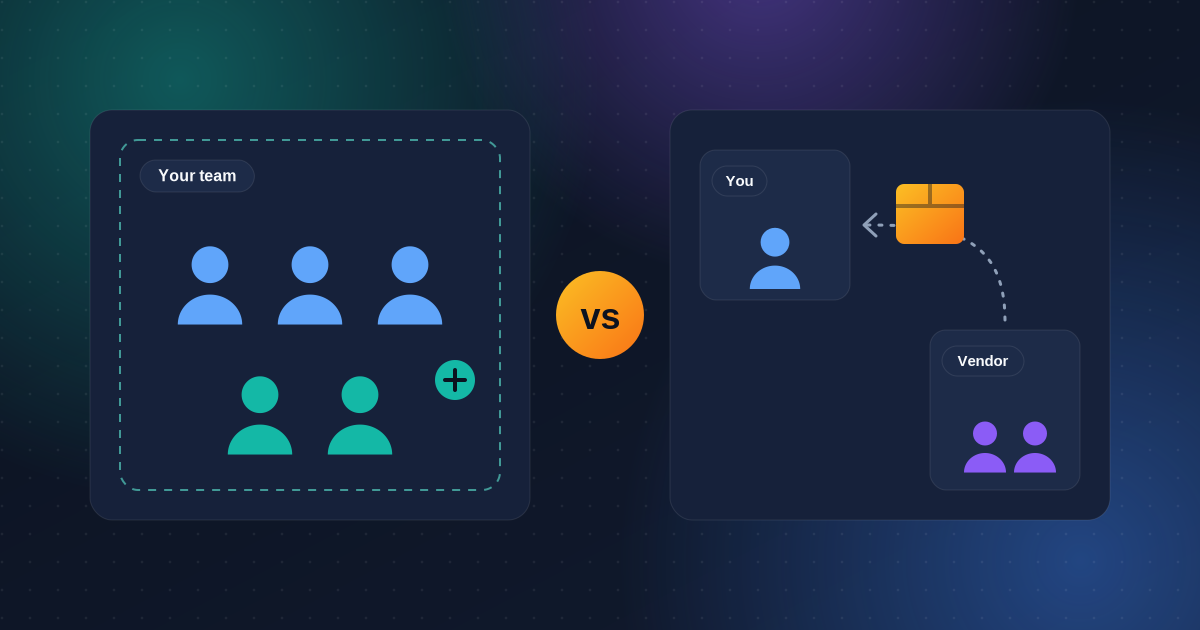
Staff augmentation extends your internal team with external talent under your management.
Outsourcing delegates a broader delivery responsibility to a partner.
The right choice depends on control needs, internal bandwidth and delivery maturity.
What staff augmentation really means
In a staff augmentation model, external developers join your workflows, your stand-ups and your internal product cadence. You keep direct control over priorities, architecture and delivery management.
What outsourcing really means
Outsourcing shifts more responsibility to a partner, often including staffing, planning, technical execution and sometimes QA or DevOps. This can accelerate delivery when internal leadership resources are limited.
Control, accountability and delivery ownership
The core difference is governance. Staff augmentation gives more control but also keeps more accountability inside your organization. Outsourcing can provide clearer external accountability, but only if scope and expectations are well framed.
Budget impact and pricing structure
Budget discussions should include not only rates but also management cost, process overhead, speed of execution and rework risk. A cheaper model can become expensive if coordination or quality degrades.
Best use cases for each model
Teams with strong product leadership often benefit from staff augmentation. Companies that need an autonomous execution partner may gain more from outsourcing. Hybrid models also work when different streams require different levels of control.
How to choose the right model for your business
The best model is the one that fits your current operating reality. Assess your roadmap pressure, leadership capacity, technical governance and need for flexibility before deciding.