For UK CTOs and engineering leaders, the question is no longer whether to nearshore — it is where. Eastern Europe dominated the conversation for a decade, but rising costs in Poland, Romania, and Ukraine (compounded by geopolitical instability) have pushed decision-makers to look south. Morocco has quietly become the most compelling answer.
Ranked 28th globally and 2nd in Africa on the 2023 Kearney Global Services Location Index — up 12 positions since 2021 — Morocco is no longer an emerging option. It is a proven destination. Here is why.
Why "Nearshore Morocco" Is Different
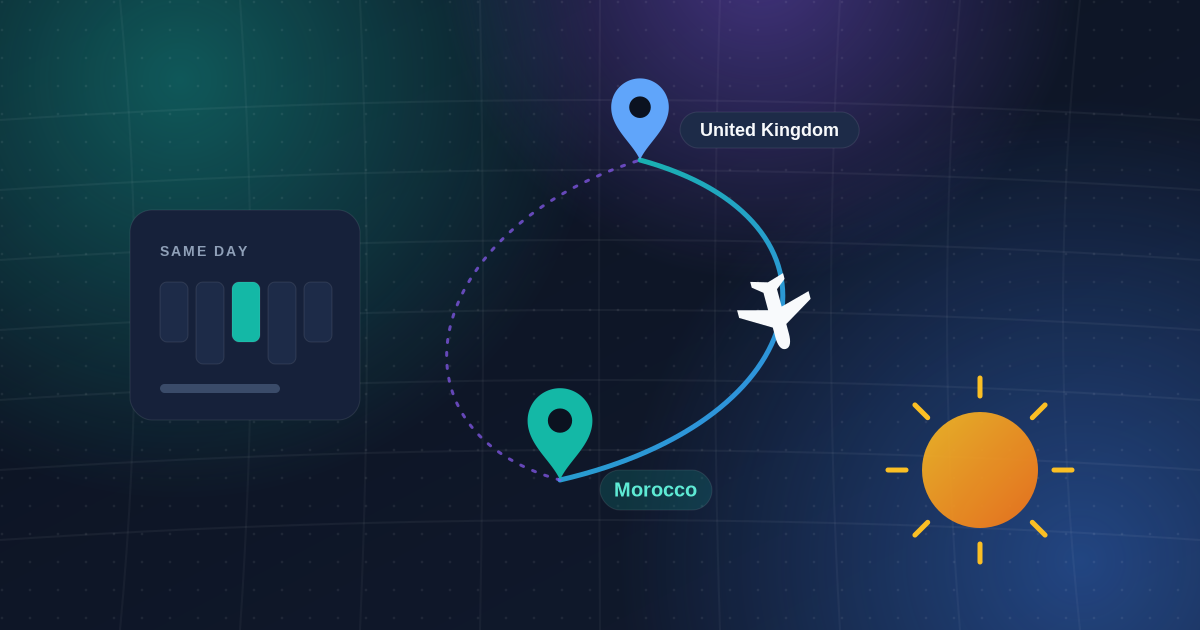
Nearshoring to Morocco is not the same as offshoring to India or Vietnam. The distinction matters. Morocco sits at the geographical and cultural crossroads of Europe, Africa, and the Middle East. For a UK company, this translates to practical, day-to-day benefits that distant offshore locations simply cannot offer:
A Government-Backed Tech Talent Pipeline
Morocco produces over 30,000 STEM graduates annually across its network of engineering schools — ENSIAS, EMI, INPT, and the 12 ENSA campuses. The country's flagship initiative, Digital Morocco 2030, has committed to training 100,000 additional professionals in digital skills by 2030.
Major tech companies have already placed their bets. Oracle has announced a $140M cloud investment in Morocco. Microsoft, AWS, and Google Cloud are actively developing local infrastructure. Multinationals including Capgemini, Accenture, IBM, Bosch, Dell, HP, SAP, and PwC all operate Moroccan delivery centres — a signal of confidence in the talent pool.
The result for UK companies: you are not pioneering into the unknown. You are stepping into a mature, internationally validated ecosystem.
The Cost Advantage: Real Numbers
The salary data speaks clearly. According to SalaryExpert, the average software engineer gross salary in Morocco is approximately MAD 283,698/year (~£23,500). Senior profiles with 8+ years of experience average MAD 324,670 (~£27,000). By contrast, the UK national average for a software engineer is £50,286/year (Indeed, May 2026), rising to £66,018 in London.
Add employer National Insurance contributions (~15%), pension (3%+ minimum), equipment, office space, and recruitment fees, and the true UK employment cost for a mid-level developer reaches £65,000–£75,000/year. With a Moroccan nearshore model, you can build the equivalent capability for 40–60% less — without sacrificing quality.
Morocco vs Eastern Europe: A Direct Comparison
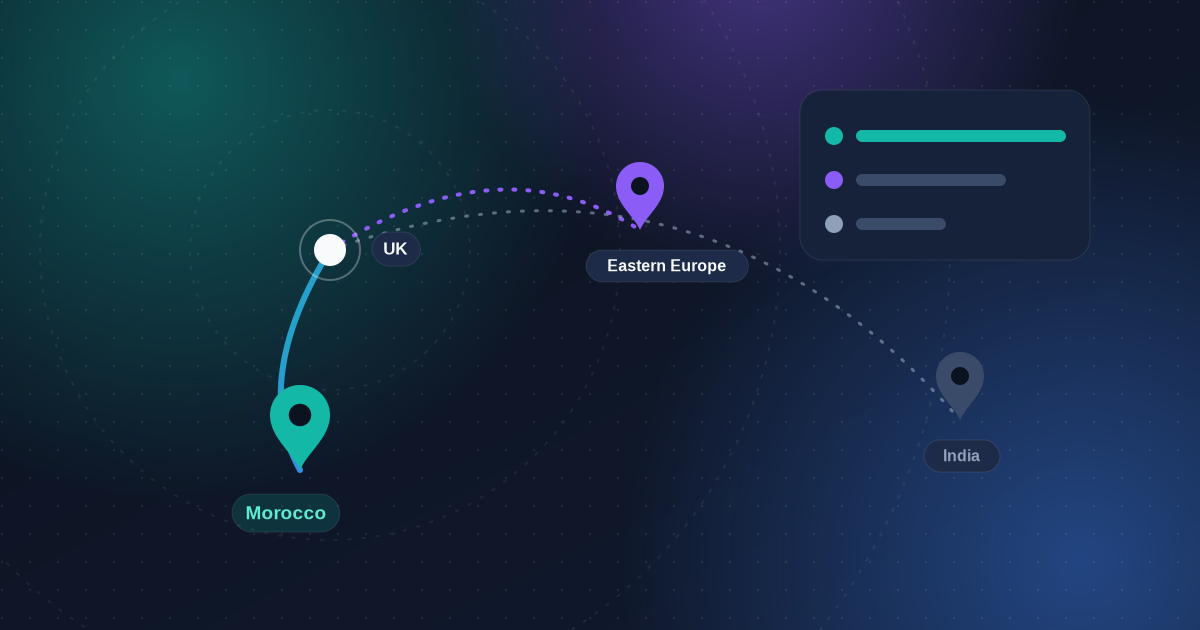
For years, Poland, Romania, and Ukraine were the default nearshore answer for UK companies. This comparison has changed significantly:
- Cost: Polish and Romanian developer rates have converged towards Western European levels. Morocco remains 30–50% more cost-effective than Poland for comparable profiles.
- Geopolitical risk: The war in Ukraine disrupted thousands of outsourcing contracts. Morocco presents zero such risk.
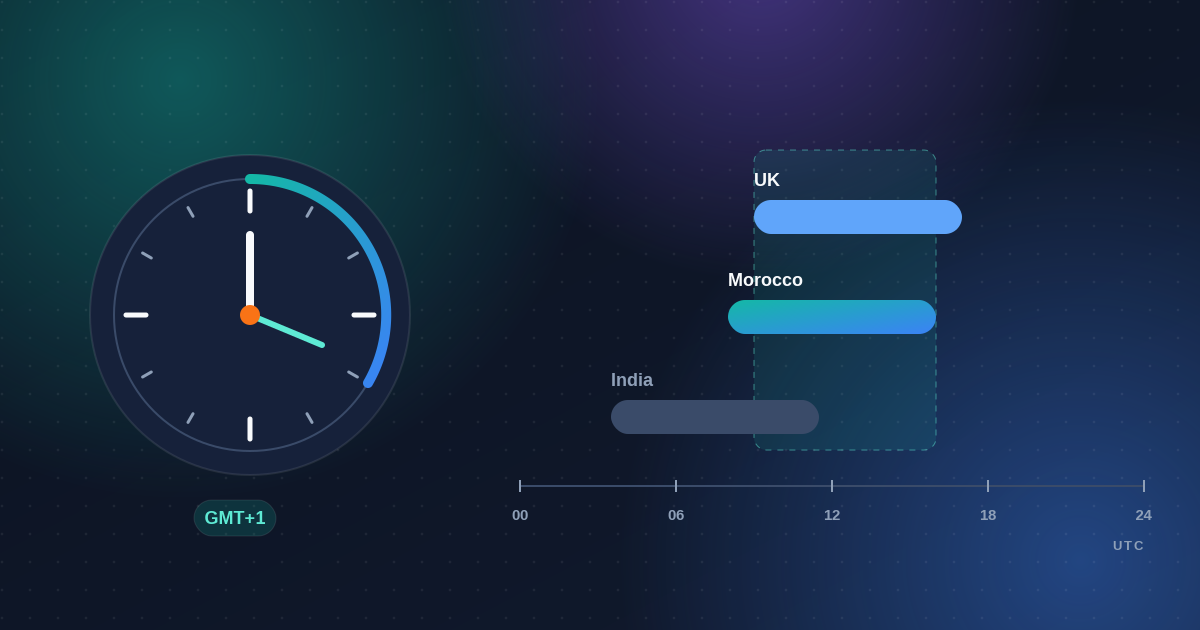
- Timezone: Morocco (GMT+1) is equivalent to Central European Time — the same as Poland, Romania, Czech Republic — but without the instability premium.
- Talent pool growth: Eastern European talent pools are tightening due to emigration and market saturation. Morocco's pipeline is expanding, supported by national Digital Morocco 2030 investment.
- Language: French and English fluency in Morocco is comparable or superior to most Eastern European markets for UK-specific business communication.
- Cultural alignment: Strong French influence means professional business culture norms align closely with Northern European expectations.
Digital Morocco 2030: A Strategic Anchor
The Moroccan government is not leaving tech growth to chance. Launched in September 2024, the Digital Morocco 2030 Strategy commits the country to becoming the leading tech hub in Africa for foreign investment, fostering a thriving startup ecosystem, and developing AI and cloud infrastructure at scale.
The sector already contributes 6.8% of national GDP, and export revenues from IT outsourcing reached a record 17.9 Billion MAD in 2023 — a 14% year-on-year increase. This is institutional momentum, not a transient trend.
"Morocco's nearshore advantage for UK companies is structural: same timezone, lower cost, growing talent pool, stable political environment, and a government actively investing in making it the tech hub of Africa."
Conclusion: The Case is Compelling
For UK companies evaluating nearshore options in 2025, Morocco offers a rare combination: cost efficiency comparable to Eastern Europe five years ago, timezone alignment equivalent to Central Europe, and a talent pipeline that is growing — not stagnating. The multinationals and the data both point in the same direction.
If your engineering team needs to scale, Morocco deserves to be your first call — not your backup plan.